Spills and after-hours cleanups in warehouses and plants
A fast, well-ordered response keeps a spill from becoming a slip hazard or a lost shift.
October 27, 2026 · 4 min read
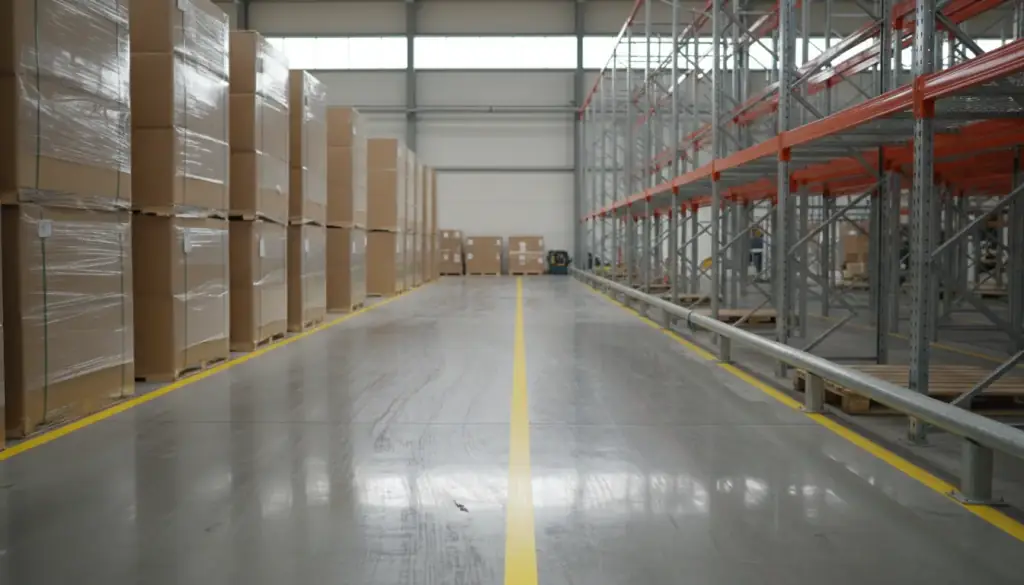
Spills don't wait for business hours. A pallet of product gets dropped on the second shift, a hose lets go over a weekend, a forklift clips a drum at five in the morning. In a warehouse or plant, a spill is not just a mess. It's a slip hazard, a reason to stop a line, and sometimes a reason to close a section of the floor until it's dealt with.
Why the first call matters
The quicker the right crew is on site, the smaller the problem stays. Liquids spread and soak into concrete joints. Oils get tracked by tires and boots into other areas. Sticky product dries into a film that takes far more effort to remove. Calling early costs less than calling after the spill has had a day to settle.
We answer calls around the clock, every day of the week, for emergency custodial and industrial work. That includes fast spill cleanups. You shouldn't have to find out on a Saturday night whether your cleaning contractor picks up the phone.
What to tell us on the phone
You don't need a perfect report. A few details change what we bring, and they help the crew arrive ready to work:
- What spilled, by product name if you have it, and roughly how much.
- Where it is: concrete, sealed floor, epoxy, near a drain, near racking.
- Whether it has spread beyond the original area or reached a drain or sump.
- Whether the area is blocked off and who on your side can meet the crew.
- Where the safety data sheet for the product is kept, if there is one.
How a cleanup actually goes
First, the area gets controlled. Foot and forklift traffic are routed away, and the edge of the spill is contained so it doesn't keep creeping. Then the bulk of the liquid is picked up or absorbed. Only after that does cleaning start, because wiping a puddle just thins it out and spreads it around.
Residue is next. Oils and greases need a degreaser, and for that work we use neutral pH and alkaline cleaners, matched to what the floor and the product can handle. The area is scrubbed with the right machine, rinsed, and the water picked up so the floor can dry. A floor that's clean but wet is a new hazard, so drying is part of the job, not a courtesy.
Beyond the spill: the rest of an industrial scope
Emergency work is one piece of what a plant or warehouse needs. Regular scopes often include warehouse ceiling cleaning, lighting and fixture dusting, locker area sanitization, break room and kitchen cleaning, washroom disinfection, and waste collection and removal. For heavier jobs there's industrial pressure washing, plus pit, sump and tank cleaning.
Facilities that handle food have extra concerns. Prep areas and food handling zones need decontamination, not just a rinse, and equipment and machinery need disinfecting between runs. Those jobs call for a plan that fits your production schedule, which is a conversation better had before you need it.
Plan before the emergency
The smoothest emergency calls happen at facilities that did some thinking in advance. Know who has authority to approve work at night. Keep product safety data sheets where a crew can find them. Mark drains and sumps on a simple floor plan. Keep a spill kit stocked and make sure every shift knows where it is. None of that takes long, and it shortens the response when something goes wrong.
It also helps to have a walk-through done in daylight. When a consultant visits your facility, we learn the layout, the floor surfaces, the access points and the loading docks. If we're called at 3 a.m. later on, nobody is explaining the building for the first time while a puddle spreads. That's one more reason the free estimate is worth taking even if you aren't ready to book regular service.
Equipment and supplies come with the crew
Our estimates cover all supplies, labor, equipment, tools and chemicals, so an emergency job doesn't turn into a scramble to source product. The crew arrives with what the work needs. You don't have to move furniture or racking that isn't part of the affected area, and you can keep the rest of the operation going where it's safe to.
If you run a warehouse, plant or distribution space in Belmont or nearby, call (650) 458-1212 to set up a daytime walk-through. We'll look at the floors, talk through what a spill response would involve, and give you a free estimate for any regular work. Save the number now, and you'll have it when you need it.
Cal-State Building Maintenance, (650) 458-1212
Call (650) 458-1212More articles
What a commercial cleaning estimate walk-through actually covers
A number given over the phone is a guess, and the walk-through is where a cleaning estimate becomes something you can plan around.
Strip and wax, or burnish? Choosing the right fix for tired hard floors
A full strip is the right call sometimes, but plenty of floors only need a burnish or a scrub and recoat.