Strip and wax, or burnish? Choosing the right fix for tired hard floors
A full strip is the right call sometimes, but plenty of floors only need a burnish or a scrub and recoat.
October 27, 2026 · 4 min read
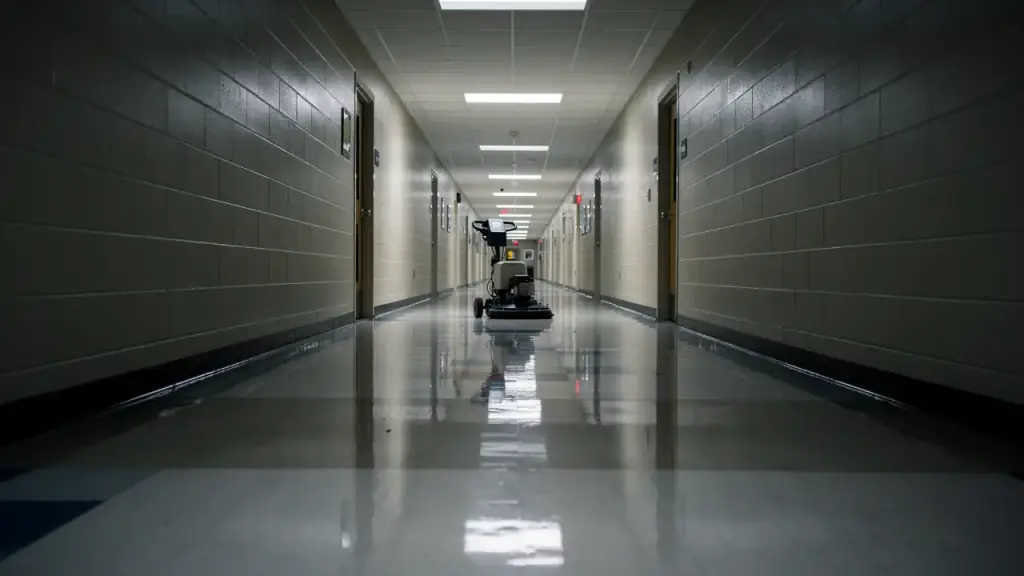
A floor starts to look tired long before it's actually worn out. The shine goes flat in the main aisle, scuffs pile up along the walls, and the corners turn a shade of gray no mop will fix. At that point the question for most managers is whether the floor needs a full strip and wax or something lighter. The answer saves money either way, as long as someone looks at the floor before choosing.
What the finish on your floor is actually doing
On a coated floor like vinyl composition tile, the wax or finish is a sacrificial layer. Shoes, carts and grit wear that layer down so they don't wear the tile itself. Think of it as the clear coat on a car. When it dulls, you're not looking at damaged tile, you're looking at a worn finish. Restoring the finish is a lot cheaper than replacing the floor.
Over time, finish also collects dirt, black heel marks and residue from cleaning products. Build up enough coats and the surface turns yellow and brittle, and no amount of polishing brings it back. That's the situation where stripping makes sense.
Burnishing: restoring the shine you already have
Burnishing means running a high-speed machine with a fine pad over finish that's still in decent shape. The friction and a little heat smooth the micro scratches and bring the gloss back. There's no water, no stripper and no new coats of wax, so it's fast, it's quiet, and the floor is ready for foot traffic almost immediately.
It's the right move for floors that are dull but clean, like a lobby, a long corridor or a school hallway. Done on a regular rhythm, burnishing stretches the time between heavier work. It's not a cure for dirt or deep scuffs, though. If the floor is stained or the finish has worn through to the tile, buffing it only polishes the problem.
Scrub and recoat: the middle option
When a floor is dirty and thin on finish but not yet built up, a machine scrub followed by one or two fresh coats of finish usually does the job. The scrub lifts the grime without removing the old layers, and the new coats rebuild the protection. It costs less than a full strip, takes less downtime, and keeps the floor from reaching the point where stripping is the only option.
Full strip and wax: when to start over
Stripping removes every layer of old finish down to bare tile. A stripping machine and a pad work stripper solution across the floor, the slurry gets picked up, the floor is rinsed and neutralized, and then thin coats of fresh finish go down with drying time between each one. Rushing the coats is the most common reason a new floor looks cloudy or peels.
You want a full strip when the finish has yellowed, when it's peeling or flaking, when old coats are trapping dirt that scrubbing can't reach, or when you're resetting a floor that's been neglected. It's the biggest job of the four and it needs the space empty for a stretch, so it's usually planned for a weekend or an off-hour window.
Not every hard floor gets wax
Our hard-floor work covers vinyl composition tile, terrazzo, slate, quarry tile and stone, polished concrete, natural stone, marble, laminate, granite, epoxy, concrete, ceramic and porcelain tile, and brick pavers. Those don't all want the same treatment. Vinyl composition tile is the classic candidate for finish. Polished concrete, terrazzo and natural stone are usually cleaned with neutral products and maintained by machine rather than coated.
Chemistry matters here. Acid-based cleaners are fine for porcelain bowls, which is where we use ours, but they can etch marble and other calcium-based stone in minutes. Neutral pH and alkaline cleaners cover the degreasing and disinfecting on floors. If your floors are stone or you're not sure what they are, say so at the estimate, and we'll identify them before any product touches the surface.
How to decide for your building
Look at the floor in raking light, with the sun or a bright fixture low across the surface. Dull but even means burnish. Dirty and thin means scrub and recoat. Yellow, patchy, peeling or full of embedded grime means strip. Different areas of the same building often need different answers, so a mixed plan is common: burnish the lobby, recoat the break room, strip the back corridor that got ignored.
Traffic and use set the schedule more than the calendar does. A school hallway or a warehouse office wears faster than a quiet back suite. Rather than refinishing the whole building on a fixed date, check the high-traffic lanes every few months and act when they need it. That keeps the finish healthy and the budget predictable.
If you have hard floors in Belmont and you're not sure which treatment fits, call (650) 458-1212. A consultant will look at the floors with you, tell you what they need and what they don't, and give you a free estimate. You won't have to move furniture to get one.
Cal-State Building Maintenance, (650) 458-1212
Call (650) 458-1212More articles
What a commercial cleaning estimate walk-through actually covers
A number given over the phone is a guess, and the walk-through is where a cleaning estimate becomes something you can plan around.
The final clean after construction, and why drywall dust is the real job
A space can look finished and still be coated in fine dust, which is why the final clean runs top to bottom.