The final clean after construction, and why drywall dust is the real job
A space can look finished and still be coated in fine dust, which is why the final clean runs top to bottom.
October 27, 2026 · 4 min read
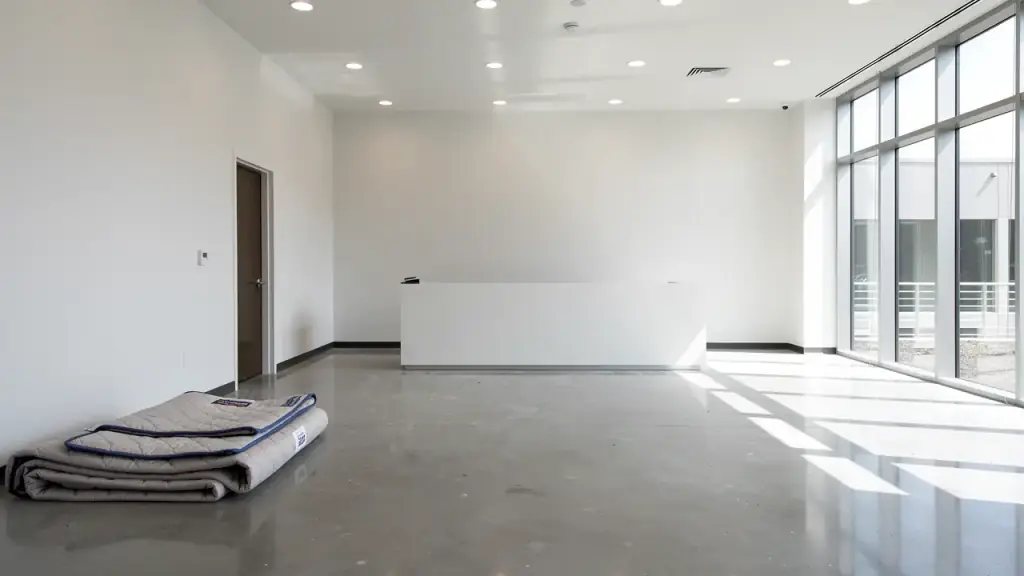
Walk into a newly finished office suite just before handoff and it looks done. The paint is dry, the flooring is down, the glass is in. Then the owner runs a finger across a window ledge, and the finger comes away white. Fine drywall dust is the last thing a job site gives up, and it's the main reason a final clean is its own scope of work and not an afterthought.
Why drywall dust gets everywhere
Sanding joint compound throws a cloud of very fine powder, and that powder travels. It settles on ledges, door tops, sprinkler heads, the tops of light fixtures and the inside of cabinets. It drifts into vents and air handlers. It sinks into the grout lines of newly laid tile, where it mixes with moisture and hardens into a film that dulls the whole floor.
If someone vacuums and mops at the end of the job, the visible mess disappears and the dust stays. Then the building opens, the HVAC starts moving air, and the dust comes down again on desks and equipment. Clients notice that within the first week, and they don't blame the dust. They blame the contractor.
Work from the top down
The order of work matters more than the effort. Everything that falls has to land on a surface that hasn't been cleaned yet. So a post-construction crew starts high and finishes low: ceilings, light fixtures and vent covers first, then walls, then windows and frames, then counters and cabinets, and floors last.
Skip that sequence and you clean the floor, then knock dust from a fixture onto it. Plenty of rooms get done twice for exactly that reason. A crew that works top to bottom through each room once is faster than a crew that has to come back.
What a final clean usually includes
Scope varies by project, but these are the items we see most often on a handoff clean:
- High dusting of ceilings, beams, light fixtures, sprinkler heads and door tops.
- Wall washing where paint or plaster work left smudges or overspray.
- Interior window and glass cleaning, including frames and tracks, with labels and stickers removed.
- Vent and air handler cleaning where the ducts were open during the work.
- Cabinets, counters and built-ins wiped inside and out.
- Washrooms detailed, fixtures polished and protective film taken off.
- Floors vacuumed, scrubbed or machine-cleaned, depending on the surface.
Floors and glass need their own approach
New floors are expensive and easy to scar. Polished concrete, tile, vinyl and carpet each need the right equipment and the right product, and the wrong one can leave a haze or a scratch you can't take back. Our crews work with carpet cleaners, scrubbers, polishers, and grout and tile machines, and we match the tool to the floor rather than the other way round.
Grout is where construction dust hides. It's porous, and a mop just pushes slurry into it. A proper clean means working the grout lines with a machine, rinsing, and picking up the residue so it doesn't dry back in. Glass has a similar problem: paint flecks, adhesive, and mineral deposits from wet work need careful scraping and the right cleaner, or the glass gets scratched.
Timing it with the schedule
The best time to book a final clean is before the punch list, not after. Inspectors and owners see problems more clearly in a clean room, and your crew isn't tripping over a cleaning crew while they fix paint touch-ups. A common approach is a rough clean when the heavy trades finish, then the final clean once punch-list work is done. That way the last day's mess doesn't undo the clean.
Builders and general contractors often need to move fast at the end, with an owner walkthrough on a hard date. Tell us the date and the square footage up front, and we'll plan crew size and hours to land on time. We bring our own supplies, equipment and chemicals, so there's nothing to arrange on your side, and nothing for your site super to track down.
Residential builders too
The same logic holds for new homes. Fresh paint, new tile and finished cabinets all hold dust, and a buyer's first walkthrough is the moment it shows. Whether it's a tenant improvement in a commercial building or a new home, the final clean is what the owner remembers about the handover, so it's worth giving it a proper scope.
If you've got a project in Belmont and want a final clean quoted, call (650) 458-1212. We'll walk the space, talk through the sequence and your handoff date, and send a free estimate. No need to clear the site for us to take a look.
Cal-State Building Maintenance, (650) 458-1212
Call (650) 458-1212More articles
What a commercial cleaning estimate walk-through actually covers
A number given over the phone is a guess, and the walk-through is where a cleaning estimate becomes something you can plan around.
Strip and wax, or burnish? Choosing the right fix for tired hard floors
A full strip is the right call sometimes, but plenty of floors only need a burnish or a scrub and recoat.